


With state education officials introducing proposed changes for school funding, other state leaders say they will examine the proposal and are prepared to work collaboratively on the issue.
The state Department of Education on Wednesday rolled out a detailed framework to update West Virginia’s school funding methods, intending for the proposal to be a starting point.
“We received the proposal, and our team is reviewing the details,” said Lars Dalseide, spokesman for Gov. Patrick Morrisey.
“Governor Morrisey looks forward to working with the West Virginia Department of Education and the Legislature during the upcoming legislative session to develop long-term solutions that strengthen our schools, improve student outcomes, and reflect his commitment to educational excellence.”
As community schools have had to close or be consolidated all across the state, the adequacy of the state school funding formula has continually arisen.
Education officials have warned that 8 to 20 schools face closure or consolidation across West Virginia in the coming year.
Lawmakers have discussed replacing the enrollment-based funding formula with an updated needs-based tiered system, but all of their proposals have crashed out the past couple of legislative sessions.
In the off season, lawmakers have focused several interim committee discussions on possibilities for reforming the school aid formula.
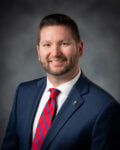
“Proposing a bill prior to the start of session is incredibly helpful, and it allows us to work with the Department’s perspective as we continue to refine our own legislation to modify the formula,” said Senate Finance Chairman Jason Barrett, R-Berkeley.
“It is far better step toward reaching a consensus than the State Board of Education criticizing the Legislature after the session ends, which has been the Board’s policy of late.”
Barrett said the Legislature has engaged in discussions for years about the need to adjust this formula to better reflect the changing landscape of student and family needs, “and we’re pleased to see the Department of Education take this proactive step forward with their proposal today.
“We look forward to reviewing it and working together on a solution that provides the best education possible for all of West Virginia’s children.”

House Education Chairman Joe Statler, R-Monongalia, said he is reviewing the proposal from the state Department of Education and is glad to have specifics to consider. He noted that lawmakers have been working on the issue for a couple of years while meeting regularly with the state superintendent and other education officials.
“And I will tell you that we welcome the department’s engagement and generally collaborative process that we’re going to go through on what they feel can be done,” Statler said on “Talk of the Town” on WAJR Radio.
“The state Department has now placed the ball on the goal line, and now we’ll start moving to see where we can go.”
Statler said he feels assured that some of the proposals in the Department of Education proposal have come up in earlier discussions.
“It’s all hands on deck on this particular issue, and we are trying to come up with a solution, and we are very much happy to be able to work with the Department of Education on coming up with a workable solution,” he said.
A key proposal is establishing a financial smoothing system intended to stabilize enrollment calculations to buffer districts against sudden population declines.
Another proposal would introduce weighted funding categories targeting specific student needs such as poverty, special education and English language learning. Cummings estimates the proposed special-education weighted funding, on its own, would require about $190 million.
The initiative also addresses operational shortfalls by funding previously unsupported professional positions, like transportation supervisors, and establishing efficiency requirements like shared services. The proposal is also aims to integrate public charter schools into the state aid framework.
“The key differences are going to come down to how enrollment is incorporated into the formula. You know, we’ve had massive declines in enrollment across this state over at least a 10-year period now, at this point losing about 50,000 students in terms of net enrollment over that period of time.” said Uriah Cummings, financial operations officer for the state education department, on MetroNews Talkline.
“So the formula methodology that’s been proposed would help kind of offset that by looking at three-year average using a smoothing methodology, and then secondarily would be applying weights in order to provide specific funding for subsections of students such as special ed, low social economic status, English learners, students like that.”