


Senators passed a bill affecting how West Virginia retirement funds engage with environmental, social and governance practices.
Those socially responsible investment concepts, commonly described as ESG, are a lightning rod where the political world converges with the investment world. Political figures in conservative states have been decrying the concept as a form of woke capitalism.

“This is nothing more than part of the woke movement to shut America down,” Senator Rupie Phillips, R-Logan, said of the investment practices.
In West Virginia, the issue has pit the state Treasurer, who wants to crack down on that type of investment screening, against the executive director of the state Investment Management Board, who says its fiduciary representatives need latitude for the best return on investment for the state’s retirees.
House Bill 2862 would adjust standards for shareholder voting by the West Virginia Investment Management Board and the Board of Treasury Investments. It specifically affects proxy votes cast on behalf of those investment bodies.
The bill passed the Senate, 30-2.
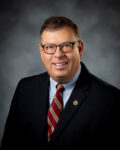
Senator Mike Oliverio, R-Monongalia, offered an amendment to limit the change initially to investments for West Virginia’s Rainy Day Fund B, representing about $500 million. He said that would give West Virginia a cautious way to see how the change works.
Without the amendment, he said, the changes would affect pension investments valued at about $20 billion.
“Because I ask you, have have you been asked by any bank in West Virginia to change this investment policy? Have you been asked by any investment or brokerage firm? Have you been asked by any financial advisors to change? In fact, our own investment management board has recommended against doing this,” Oliverio said.
“This is a major pension bill. The purpose of my amendment is to limit the risk to our pensions.”
State Treasurer Riley Moore, a Republican who is running for Congress, has spoken repeatedly in favor of the bill.
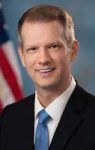
“The proxy-voting policy of the Investment Management Board has not been updated in over 20 years,” Treasurer Riley Moore said this week on MetroNews’ “Talkline.”
“Now the world has changed a lot over those last couple of decades where ESG is now a financial consideration that is part of the investment world now. So this bill is trying to bring us into the current, contemporary financial landscape that we find ourselves in.”
Moore said the bill would create a standard for proxy voting on investment matters. Sometimes that duty is tied to brokerage firms.
He said the Investment Management Board has done a good job in managing investment for West Virginia state retirees, but “technically, the IMB is not managing the money.
“They delegate to managers. And here’s the next step that’s the issue. Those managers delegate proxy voting to proxy advisory firms whose stated goals are to vote for things like net-zero carbon emissions, gender equity, racial justice, LGBTQ, things like that that fall under the ESG parameters. To me, that is not the maximization of return of potential, casting those kinds of votes.”
HB 2862 would adjust standards for shareholder investing, which would affect how West Virginian's retirements engage with environmental social and governmental practices. @RileyMooreWV discusses this bill with @HoppyKercheval. WATCH: https://t.co/yCFQ3nDJuy pic.twitter.com/4Mkj24NHmd
— MetroNews (@WVMetroNews) March 9, 2023

Craig Slaughter, executive director of the West Virginia Investment Management Board, questioned in a legislative committee meeting earlier this week why a law is necessary. He said representatives of the board consistently strive for the economic best interest of beneficiaries, generally pensioners.
Slaughter said he used to believe consistent return on investment for retirees would keep politics out of the process. “But the fact that there hasn’t been any proof suggests to me that this bill is more about something else, that there is some politics here.
“I’m worried about what comes next. What else does the Legislature want us to do, to micromanage how we go about our business and tell us how to do that? That’s what worries me.”