

The nine justices of the U.S. Supreme Court heard arguments about a West Virginia law forbidding the participation of transgender athletes on school sports teams.
The justices heard almost an hour and a half of arguments about West Virginia vs. B.P.J., which represents the initials of a young transgender athlete. As with most appeals cases, this was a back-and-forth with justices asking questions one after another on finer points of law, with lawyers defending their positions.
The West Virginia oral arguments directly followed those in a parallel case from Idaho, Little v. Hecox.
The Supreme Court would typically announce its ruling in the case by this spring or summer. Analysts who cover the Supreme Court on a regular basis assessed from the questions that the court appears likely to uphold West Virginia’s law.
The questions being posed to the Supreme Court are:
— whether Title IX of the Education Amendments of 1972 prevents a state from consistently designating girls’ and boys’ sports teams based on biological sex determined at birth;
— and whether the equal protection clause of the 14th Amendment prevents a state from offering separate boys’ and girls’ sports teams based on biological sex determined at birth.
The plaintiffs, 15-year-old Bridgeport resident Becky Pepper-Jackson and her mother, were challenging a law passed in 2021, when West Virginia joined dozens of states in placing restrictions on transgender athletes’ participation on sports teams.
The West Virginia Attorney General’s Office defended the state law, with state Solicitor General Michael Williams addressing the court.
“States have long assigned students to sports teams by sex. West Virginia is no different. Maintaining separate boys and girls’ sports teams ensures that girls can safely and fairly compete in school sports. The question today is whether this enduring structure can can continue. It can,” Williams said, addressing the justices.
“Title IX permits separate teams. It does so because biology matters in athletics in ways both obvious and undeniable. The text, history, context and structure of the statute, alongside regulations expressly authorizing what West Virginia has done, confirm as much.”
Williams added in his opening statement, “Ultimately, West Virginia’s law, like the laws of at least 26 other states, simply preserves the enduring structure on which girls’ sports depends. It should be upheld. I welcome the Court’s questions.”
West Virginia’s law, House Bill 3293, defines male and female “based solely on the individual’s reproductive biology and genetics at birth.”
A key part says, “Athletic teams or sports designated for females, women, or girls shall not be open to students of the male sex where selection for such teams is based upon competitive skill or the activity involved is a contact sport.”

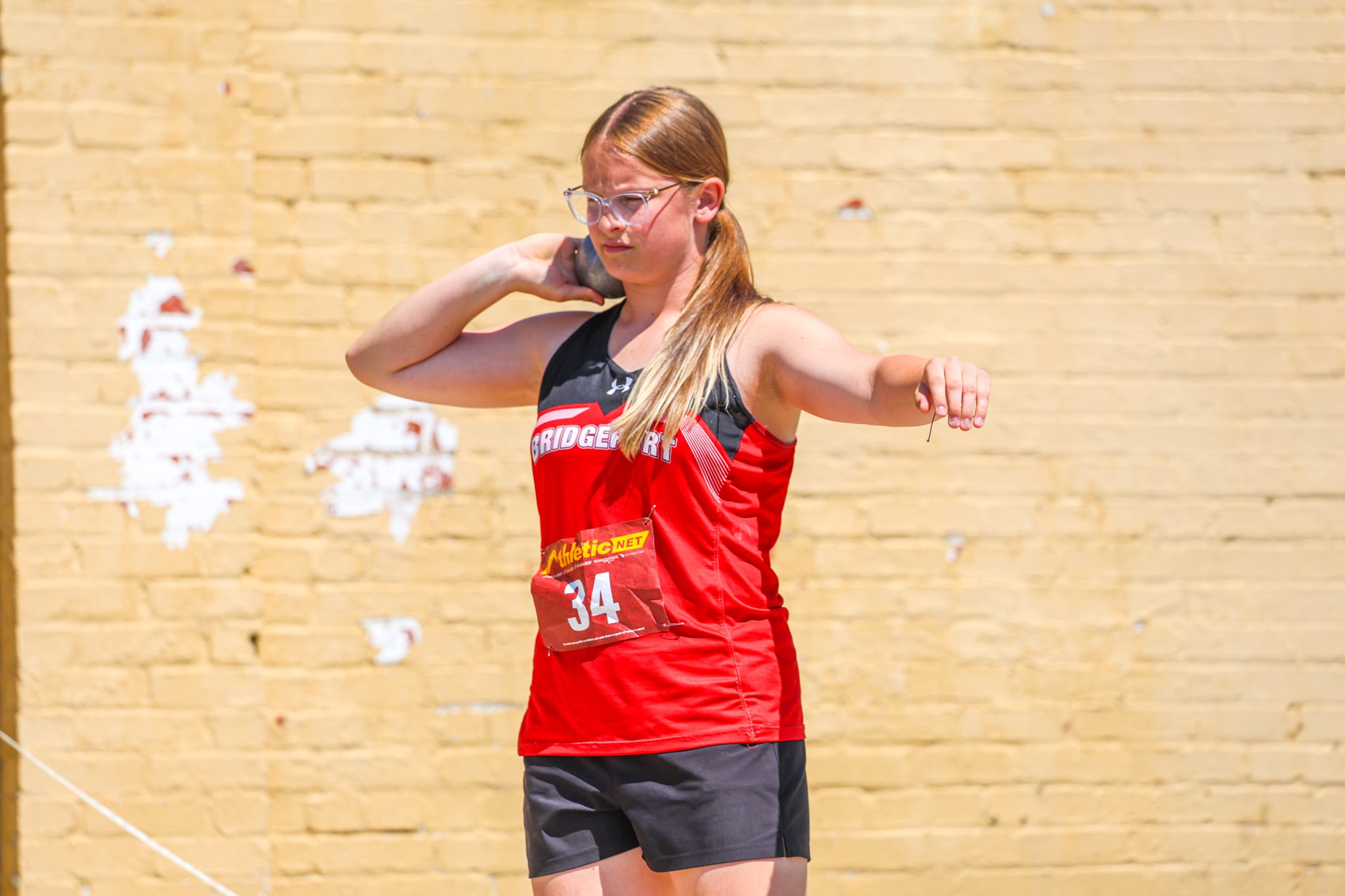
The West Virginia case focuses on student athlete Becky Pepper-Jackson, who was born male but identified as a girl from a very young age. By third grade, she was living as a girl at home and told her mother and father she did not want to keep going to school dressed as a boy.
More recently, she was diagnosed with gender dysphoria and had been receiving puberty-delaying treatment for almost a year when West Virginia passed a bill affecting transgender athletes. Her federal lawsuit, where she is referred to as B.P.J., was aimed at being able to participate on the cross-country and track teams in Bridgeport.
Pepper-Jackson has been allowed to compete as the case has gone through the federal court system. Last spring, she qualified to compete in shotput and the discus throw in the West Virginia High School State Track & Field Championships. She placed third in discus and eighth in shotput.
Becky Pepper-Jackson Becky and her mother are represented in the case by the American Civil Liberties Union, the ACLU of West Virginia, Lambda Legal and Cooley LLP.
“BPJ signed up for school sports because she was an 11-year-old girl starting a new middle school who wanted to meet people, make new friends, and be part of a team,” said Joshua Block, the attorney who argued her position before the Supreme Court.
“West Virginia argues that to protect these opportunities for cisgender girls, it has to deny them to BPJ, but Title IX and the Equal Protection Clause protect everyone, and if the evidence shows there are no relevant physiological differences between BPJ and other girls, then there’s no basis to exclude her.”