


CHARLESTON, W.Va. –Lawmakers heard discussion Monday on a bill that would create a Bring Them Home Fund to help return foster children placed out of state to West Virginia.
House Bill 4021 was introduced last week on behalf of Governor Patrick Morrisey, who said bringing those children home would be a focus this legislative session.
Currently, 401 children are living out of state. These placements occur because West Virginia faces a shortage of local foster homes or specialized facilities that can meet the children’s specific behavioral, medical, or therapeutic needs.
The bill would create a fund to be used in several ways, including renovating existing state-owned facilities to provide services to children, developing treatment programs, expanding the child welfare provider network, and other related initiatives.
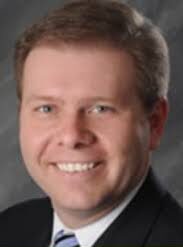
Curtis Capehart, Director of Policy for Governor Morrisey, said the bill would help bridge the gap between those children and in-state facilities.
“This bill is a step in remedying that problem, HB4021 would set in place mechanisms that would renovate West Virginia’s existing childcare facilities, state owned facilities, and state-owned properties and bring home our kids that are currently placed out-of-state,” Capehart the House Committee on Health and Human Resources Monday.
He said having the children in-state would change their outcomes, save WV money and also rejuvenate the state’s compacity to care for these kids.
Capehart explained that the fund would be a revolving fund, made up of legislative allocations, grants, gifts, donations, and income earned from money, property, and other assets, with about $6 million provided as a seed fund to get the efforts started.
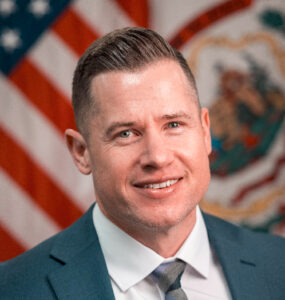
West Virginia Department of Human Services Secretary Alex Mayer said the fund is intended to get the ball rolling on efforts to create these facilities.
“To begin addressing some of these facilities, now as we get down the path and there’s adjustments that need to be made I think that’s a point of conversation, but I think you raise a good point some of the discussions that we’ve had is how we got to the $6 million, and it’s not just a number that we’ve picked out of thin air,” Mayer said.
Capehart emphasized that the fund would be overseen by Mayer and would use money saved from sending children out of state.
“The Secretary of Human Services would reinvest savings that come from decreasing the number of out-of-state placements directly into the fund to continue the expansion and renovation of in-state facilities,” Capehart told lawmakers Monday.
Mayer said the department currently spends $62.4 million on the cost of care for children placed out of state, which averages $155,600 per child. He added that bringing home just 20 children could save roughly $2.78 million.
He said the department has identified a few facilities that could potentially be renovated to serve as one of these new facilities.
“Greenacres down in Lesage was previously used for some residential property but is now vacant, they have two vacant faculties at the moment,” Mayer said. “Darby farm, that’s another state-owned property that is vacant, previously used for I believe an IDD related day school, I think was the last utilization of that property.”
He said that so far, he has visited a couple of properties, but the department has identified about five or six potential sites.
Capehart mentioned that the bill also provides a way for the Department of Human Services to work with other state agencies to identify suitable properties.
“Also, provides for the department working with other state agencies and the state Board of Education to identify state owned properties that could be used for a childcare facility,” he said. “Other state agencies are to identify what state property can serve a better public need through repurposing as an in-state childcare location.”
Del. Sarah Drennan specifically asked whether there is a target population of children the department plans to bring home
Capehart said the focus is on ensuring that these children have all of their needs met within the state.
“The higher acuity is certainty a focus, the fact that we again do not have the resources in the state, trying to remedy that gap, sort of fill that hole if you will, that would be one of the focuses, what have we had to send kids out-of-state for and then making sure that we have it here so we don’t have to do that anymore,” he said.
Mayer said that if the bill passes both the House and Senate and is signed into law, he hopes to have the program up and running within a year.