

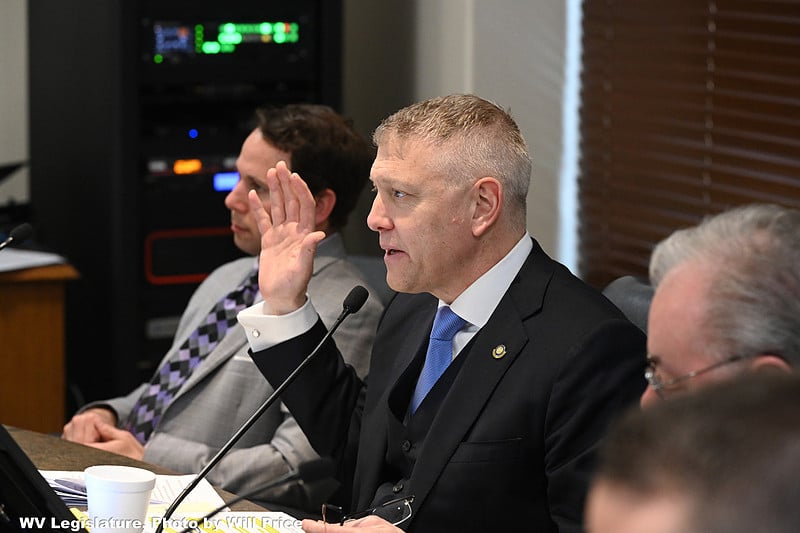
The Senate Judiciary Committee advanced a bill intended to address Gov. Patrick Morrisey’s goal of bringing foster children who have been placed in out-of-state treatment facilities back to West Virginia.
Senate Bill 399 would create what the governor has called the “Bring Them Home Fund.” The Senate Judiciary Committee discussed the bill for about an hour on Monday afternoon before advancing it.
The bill now goes to the Senate Finance Committee for consideration. A similar bill, House Bill 4021, earlier advanced out of that chamber’s health committee and is awaiting review by House Finance.
The legislative calendar essentially lays out a deadline by the end of this week to move bills out of committee.
West Virginia continues to have 5,905 total child welfare placements, according to a state dashboard, and, of the total, 546 are out of state placements.
West Virginia children are typically sent to out-of-state placements because of a shortage of available local foster homes or specialized facilities that can meet their specific behavioral, medical or therapeutic needs.

“The genesis of this was really an outgrowth of some of those types of conversations that the department had been having with those existing providers in the state of West Virginia, about expanding the need for what we don’t currently have in West Virginia, and why we’re having to send so many of our kids to other states,” Curtis Capehart, policy director for the governor’s office, told senators.
The governor has described wanting to improve the longstanding situation. The governor has described a new revolving investment fund meant to reduce out-of-state placements by investing in state facilities.
He has described a goal of expanding in-state treatment capacity while reinvesting the savings from the more costly out of state placements to build capacity in the state.
Morrisey has said the revolving investment fund could be used to renovate and repair existing state properties and provide high acuity psychiatric, neurodevelopmental and trauma services.
Capehart told senators, “This was an effort to move in the direction of actually reinvesting money into the state’s facilities that we already own so that we would have the capacity to have facilities that could provide these kinds of high acuity services here in West Virginia.”
The bill under consideration would establish the trust fund to be administered by the Department of Human Services.
It is not an appropriations bill, but it does specify that the fund would include any appropriations by the Legislature as well as any grants, gifts, donations, contributions or revenues received plus interest that’s generated.
The bill continues by saying the secretary of human services would oversee investing the savings from decreased numbers of out-of-state placements directly into the fund for continued expansion of high-quality child welfare treatment facilities and services.
The human services secretary would be authorized to use the fund to renovate existing state properties to expand high-acuity psychiatric, neurodevelopmental and trauma services for children in West Virginia and to develop treatment programs that match clinical profiles of youth historically placed out-of-state.

Senator Joey Garcia, D-Marion, tried to amend the bill to prioritize grant funding for nonprofit organizations for renovation, construction and maintenance of facilities, but his proposal was rejected. Garcia, at the end of the meeting, said he would offer the proposal again on the Senate floor.
“I’m not one to give up easy,” Garcia said. “I’m going to make this amendment on floor too, and I will do my best to talk to each and every person on this committee, each and every person in the Senate, because this is a really important issue, and it’s important we get this right.”
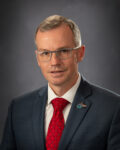
Senator Eric Tarr, R-Putnam, made a broader closing remark to say the state has the wrong focus on this matter — “So I think this is a misjudgment.”
“We have right now north of $500 million in deferred maintenance that is not met presently across the state in state facilities — when you talk about our jails, prisons, colleges, schools, you name it. Our hospitals that just sold were about to fall in on themselves. We had to get rid of them because we didn’t keep them up,” Tarr said.
Meanwhile, he said, long-term providers for residential placement in the state experienced months of pay gaps.
“We’re going to have to get providers paid on time, paid for what they do in the state of West Virginia. We ought to pay more. That’s what fixes this problem. Not going to build more buildings that we can’t keep up. So I’m a no vote on this bill,” Tarr said.