


CLARKSBURG, W.Va. — Education officials in Harrison County are assessing next steps with the system under a partial state of emergency.
The West Virginia Board of Education seized Harrison County Schools for more close oversight during Wednesday’s meeting. Harrison joined Mingo, Logan, Upshur, Nicholas, Tyler, Hancock, Boone and Roane under state intervention.
The state board heard that Harrison County Schools was using $16 million of its reserve funding over a two-year period, the recently completed Fiscal Year 2026 and the upcoming 2027 fiscal year. Additionally, state officials reported the system is footing the bill on 239 positions more than the state funding formula allotment.

The Education West Virginia union focuses on supporting public education in the state. President of the Harrison County chapter, Ryan Deems, told MetroNews that the system didn’t get to this stage overnight. Deems said there are multiple parties to blame.
“The county board of education has had some missteps, but I also think the legislature has had some missteps by not changing or addressing the issues with the state funding formula,” Deems said.
Deems cited an “unfettered use” of school vouchers, charter schools, and other educational options. He expressed concern that the legislature isn’t adequately addressing that element of education.
Deems noted that the county has an excess levy that funds around 150 positions. He said rather than 239 positions, the county is actually closer to 90 positions over the funding formula number. He said Harrison County taxpayers have supported the levy for over fifty years, most recently approving it again in November 2024 with 76-percent approval.
He also said state officials haven’t recognized some changes that Harrison County has already made.
“The state board of education report has ignored that we have been making cuts,” Deems said. “We have not been making cuts through RIF — Reductions in Force — we have been making cuts through attrition (resignations and retirements), and we’ve cut probably upwards of 60 jobs this year.”
Deems emphasized the cuts have been coming through attrition. He said it’s been a long time since Harrison County has made staffing changes through RIF, as it typically relies upon attrition. He said while it’s commonplace in other counties, that hasn’t been the case in Harrison County.
Uriah Cummings, School Financial Operations Officer for the state Department of Education, joined MetroNews “Talkline” Thursday morning to discuss the situation. Cummings said the state Board of Education has been reviewing Harrison County’s finances.
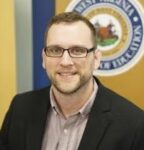
“There are public board meetings that show the treasurer having the conversation with the board back in February,” Cummings said. “Then I was actually at a board meeting in March, having the same exact conversation with their board.”
“They had plenty of time still, under the personnel laws of West Virginia, to make certain decisions that could have stabilized the fiscal position of the county,” Cummings continued. “(They) chose not to take action.”
COMMENTARY — Harrison Board Saw the Train and Refused to Move
Cummings said Harrison County had actually built up a reserve fund of $23 million several years ago, a discretionary fund to have on hand for emergencies. However, he said that money may quickly disappear. Cummings noted the forecasting is that the $23 million will go down by $6 million this year, and another $10 million for the subsequent fiscal year.
Just like that, he said, the $23 million reserve pot loses $16 million and becomes $7 million. Cummings said something has to be done.
“There has to be action that takes place,” Cummings said. “Hopefully the Harrison County Board of Education now will cut back on certain spendings, and limit that decline, but that’s currently what the forecasting is showing for the county.”
A partial state of emergency is different from a complete state takeover. Deems said the distinction is that Harrison County’s board still has some authority, and superintendent Dora Stutler still has her job.
“Our superintendent is still employed by the county, our board of education still has decision-making power in lots of situations,” Deems said. “It seems like they (the state BOE) are providing some additional oversight.”
Deems said the oversight from the state Board of Education will come in areas it has “deemed concerning.” He said it comes down to RIF and reducing staffing, but it isn’t as simple as numbers on a page. He described the employees as people who support Harrison County kids as they grow up.
Deems pointed to school mergers and closures as a contributing factor. He noted that he and his wife were part of consolidation last year. The county has lost student population from mergers and consolidations, he said, as some families have chosen to enroll on other counties’ schools when a Harrison County school closes.
Deems said the county school system has been making “responsible decisions” at the legislature’s behest, making sure that schools trend toward full capacity.
What it boiled down to, Deems said, is that the Harrison County Board of Education is “not moving as quickly” as the state board wanted them to. Deems said there is justification for concern in this case, reporting that some counties have experienced some “real disasters” with education.
There are plenty of options in Harrison County for education, Deems said. He called the county “ground zero” for school choice.
“We have lots of school choice options here,” Deems said. “We’ve always had a fairly robust private school system. We’ve had lots of religious schools in the area.”
In addition to those schools, Deems noted there are homeschooling and virtual school options. He said he’s sympathetic to parents and families who want options.
However, as a byproduct of the abundance of school choice, Deems said the county’s “hand has been forced” by the legislature and state government. He described the difference between public schools and other options as an uneven playing field. Deems said public school officials have their hands tied behind their back with protocols, regulations, and standards.
Deems said the difference between public schools and other options, such as public charter schools and those taking voucher money, is that public schools bring in “every kid who walks through the door.” He said the other education institutions can pick and choose who they want.
“How can we compare public schools, that have all kinds of levels of oversight and accountability, to these places that can make their own decisions, and do what they want, take taxpayer money, and not answer to anybody?” Deems asked.
Cummings said it’s a good thing Harrison County had the $23 million on hand, but this situation is proof that money can evaporate quickly. He said it takes a long time to get that money back, and certainly impossible to generate the funds in the same timeframe as it took to lose it.
Going forward, Harrison County Schools are in a difficult spot, Cummings said. The county can’t make any RIF changes at this point in time, he noted, and will have to wait until next fiscal year.
“To me, that’s a flaw in the system as it currently stands,” Cummings said. “There should not be this requirement that we watch a county board system falter and really drown right before our eyes, and that’s what’s happening.”
An overlooked issue in education is special education funds, Deems pointed out. He said public education is tasked with taking care of all students, including those who need the most help and support. He said he understands the state funding formula is difficult to change, but something must be done.
Deems said there were calls during the most recent legislative session to address funding for students with special needs. He said the special needs population is “exploding” in the state.
“We are dealing with a generation of students that were born into addiction,” Deems said. “I think we’ve underestimated how the drug epidemic has affected kids who are coming through school now.”
Deems said Education West Virginia will continue to push for reforms with state’s funding formula.