

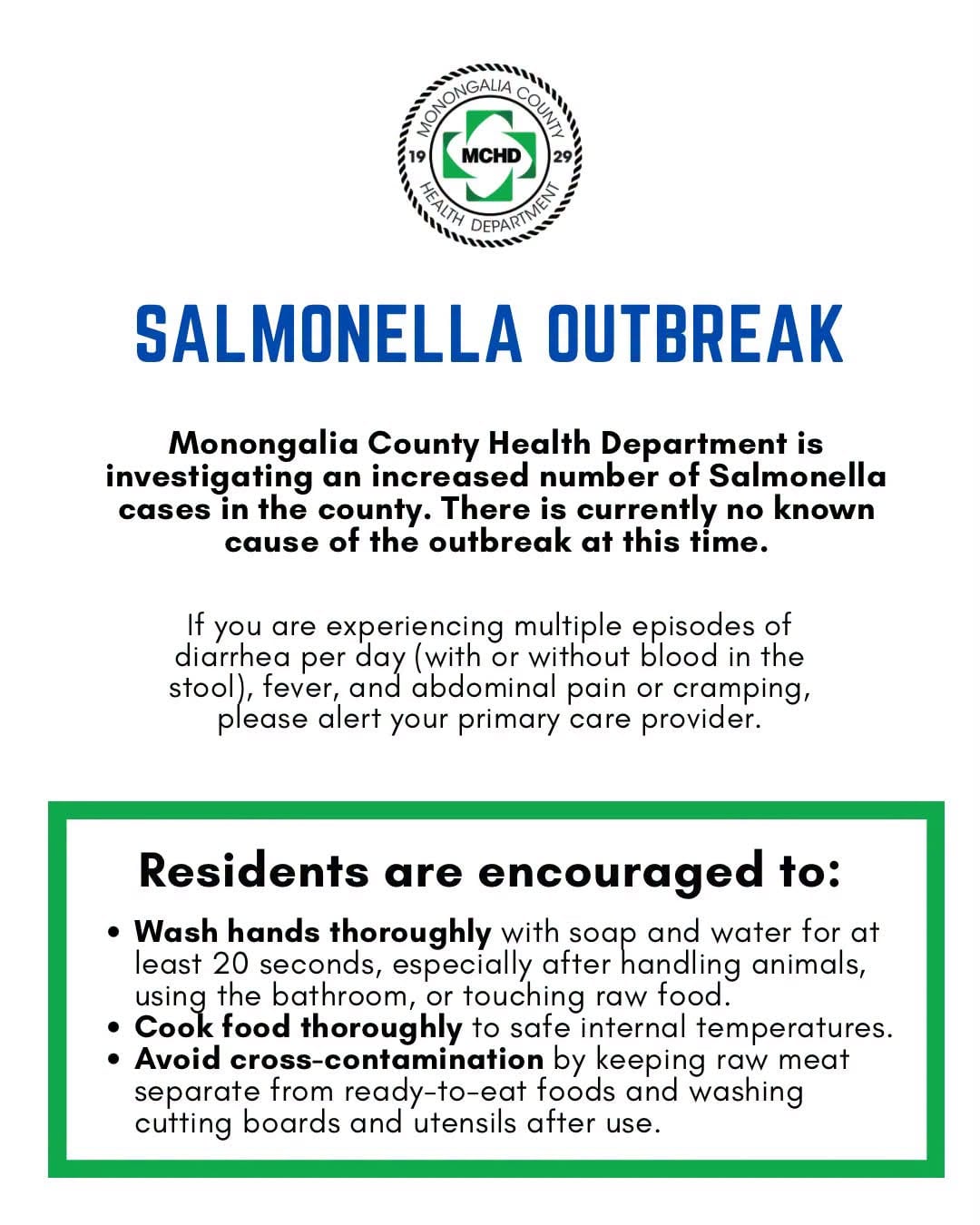
MORGANTOWN, W.Va. — The Monongalia County Health Department is investigating an increased number of salmonella cases.

MCHD Health Officer Dr. Brian Huggins said there are 16 confirmed cases and he suspects there are more that have gone unreported. Some of those unreported cases could be so mild that the person might not know they’re suffering from salmonella.
“That’s an important point that was not highlighted in our press release,” Huggins said. “It is not hundreds of people; right now we’re seeing 16 cases that were lab-positive.”
Salmonella is confirmed by testing the stool of a sick person, according to Huggins. The test results could take a matter of days to be received from the state by the MCHD.
Huggins said the cases that have been reported have been somewhat mild, and there have only been a handful of hospitalizations.
“Most of the individuals who are in that 16 either went to the ER or urgent care, and we did have a few hospitalizations,” Huggins said. “We’ve had no deaths, and most of the hospitalizations have resulted in an overnight stay to get fluids and electrolytes.”
The source of the contamination has not yet been identified, but the MCHD has a team attempting to find the cause. Residents who experience multiple episodes of diarrhea during a day are encouraged to see their primary care provider.
“I’ve got a team of epidemiologists and biostatisticians here in Mon County—we’re one of the counties that has that capability, but we don’t know a source yet,” Huggins said.
Avoid salmonella by washing hands often, cook food thoroughly, and be careful while handling raw meat. He says reptiles, including turtles, could be a source, as well as being around farm animals.
“The biggest thing is staying hydrated and keeping electrolytes in your system,” Huggins said. “Things like Gatorade, Pedialyte, and the I-V Therapy stuff—that’s really the key.”
In 32 states across the country, salmonella has been identified in fresh jalapenos and broccoli sprouts. Residents should be very careful handling reptiles in pet stores and petting zoos. and in farm settings where they could come into contact with animal waste.
“Some of the biggest culprits here are always going to be chicken or raw eggs,” Huggins said. “You should wash your hands and watch out for reptiles like turtles and farm animals.