

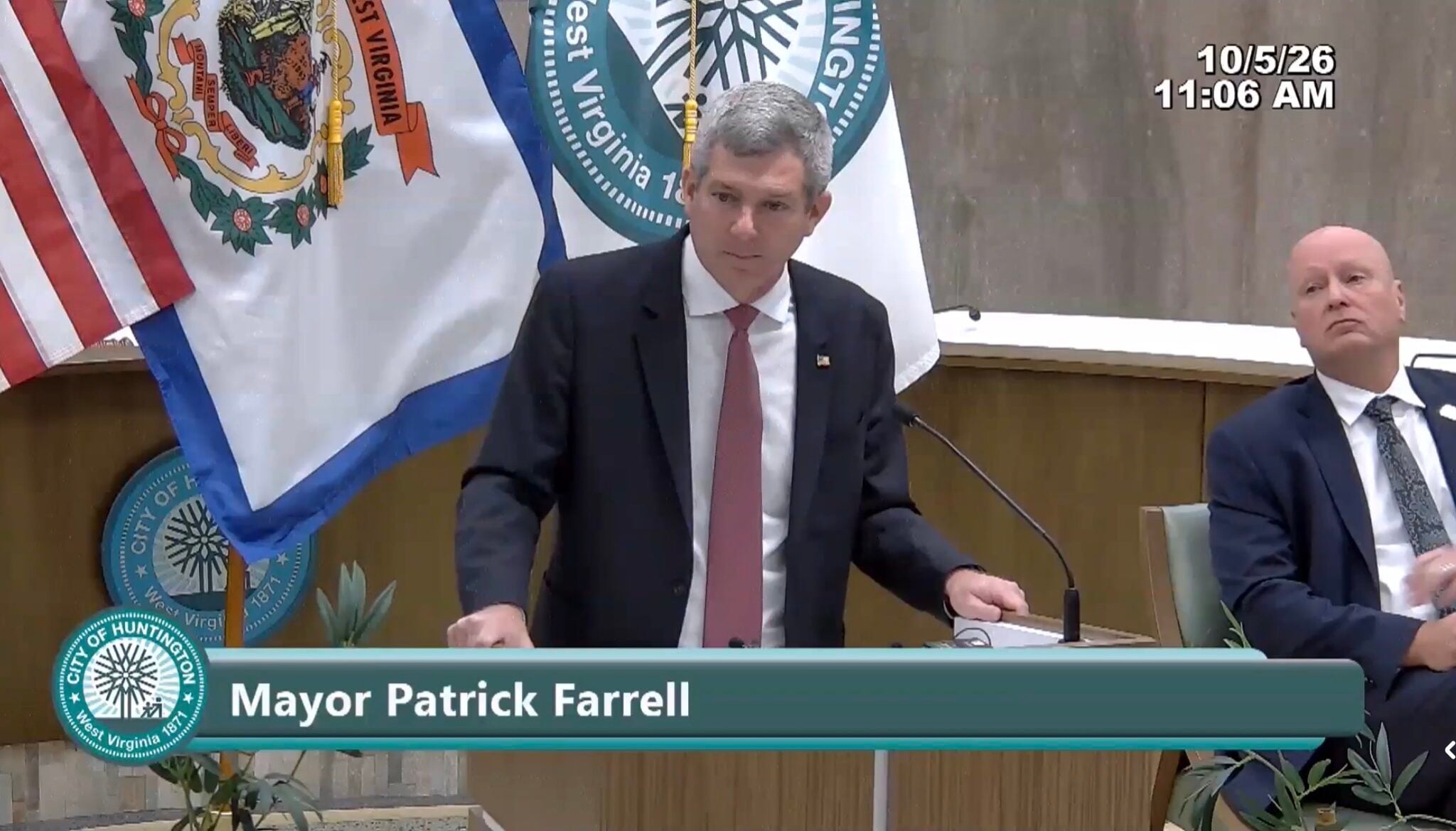
HUNTINGTON, W.Va. — Leaders in Huntington are getting ready to implement a new federal initiative aimed at helping those battling addiction, homelessness, and more.
The city of Huntington became one of eight communities in the country to participate in the $96 million program announced by U.S. Department of Health and Human Service (HHS) Secretary Robert F. Kennedy, Jr. last week. This operates through the Substance Abuse and Mental Health Services Administration’s new Safety Through Recovery, Engagement, and Evidence-based Treatment and Support (STREETS) program. Huntington will use the money through its Housing, Access, Recovery, Behavioral Health, Outreach, and Reengagement (HARBOR) program.
“It is designed instead of people having to navigate a fragmented system where they know they need different services throughout the city,” Huntington Mayor Patrick Farrell said on MetroNews “Midday” on Monday. “This is more about meeting them where they are and getting outreach to them on the streets and connecting them to recovery and treatment, rather than expecting them or hoping them to walk through the door and figure it out.”
Huntington is set to receive $12 million total over a four-year period. The initial $3 million award will be doled out this year, with further $3 million to be received in each of the following three years.
Farrell said this partners well with the existing programs in place in Huntington. One of those programs is a collaborative initiative called the HUB, among Valley Health Systems, community partners, and the city, launched last year to those experiencing homelessness.
“Huntington doesn’t lack the people, the organizations that are trying to help,” Farrell said. “We have healthcare providers, we have addiction treatment, behavioral health, lots of homelessness services but people are still falling through the cracks, and I think you can see that on our streets every day. When you have people that are suffering from substance-use disorder or severe mental illness, they can’t navigate this system.”
Farrell said the HARBOR initiative is a perfect way to tie all the existing programs together and ultimately help people in the city.
“People are cycling between the streets, the emergency room, a shelter, maybe jail, and back to the streets,” Farrell said. “We know that that cycle, we have to break it. What this grant is going to do is give us the people and the forcing mechanism to bring our city together, all the different people that are doing great work, to address that new way to get to the people and get them into treatment and off the streets.”
While some people may be hesitant to seek help, Farrell said, the way to move forward is to “break down the silos.” He pointed out that people trying to help sometimes only see one piece of the puzzle and may miss some component contributing to those people being on the street. Farrell said that, for example, this HARBOR program would bring law enforcement organizations together with healthcare and housing partners to build a view of the bigger picture.
“What we think we’ll be able to do is to identify the people that want help and get them help,” Farrell said. “The people that don’t want help, make sure that we continue to reach out to them, but not let them continue to live in a way that detracts from the rest of the city.”
Going forward, Farrell said, the STREETS program may continue to grow as federal officials learn whether or not it’s successful.
“We know that they started with us eight, but it may expand beyond us if they can learn the lessons,” Farrell said. “Does this approach work? We’re hoping that it does. We think that it’ll show us that, we’re one of eight, so that’s a great honor, but it’s a responsibility to show, can we get fewer people living on the streets?”
Farrell said city leadership is hopeful to make their first draw of money by the end of the month. He said city council will have to approve the agreement and set up Memorandums of Understanding (MOUs) with partners such as the Marshall Health Network, Valley Health, Harmony House, and more.
Other communities receiving grants include Montgomery County, OH, the Cherokee Nation in Oklahoma, City of Detroit, MI, City of Houston, TX, Miami-Dade County, FL, Robeson County, NC, and Tangipahoa Parish, LA.