

Throughout the regular legislative session, lawmakers discussed ways of addressing the high cost of education for special needs students but did not manage to get anything passed.
Now in the off season, delegates got back to work, spending a couple of hours focused on the high expense of ensuring special needs students receive their education.
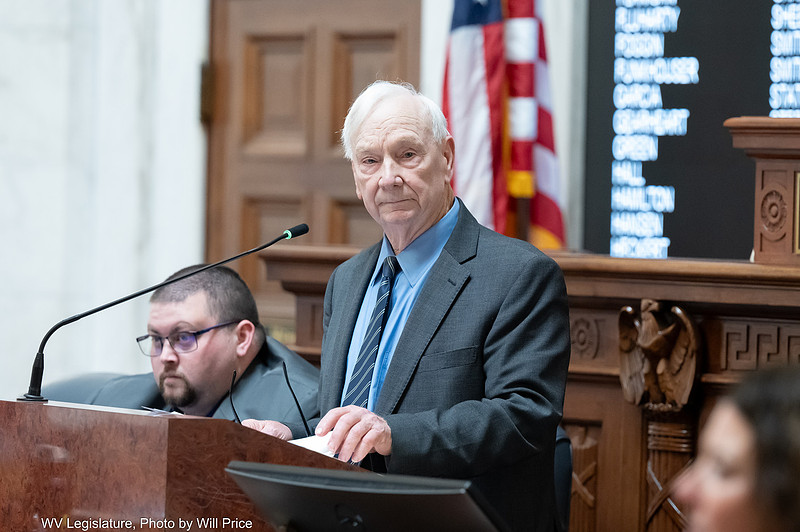
Education Chairman Joe Statler said during a two-hour discussion in the House chamber that this will be an ongoing focus.
“We’re far from the end of this. We’re just starting this race, and we are committed. I think I can safely say that (for) the committee, this is one of the top issues that is before us,” said Statler, R-Monongalia.
But he also noted an obvious challenge: “I know that the money is always going to be an issue, but we will work through and around that problem.”
A series of speakers told delegates that special education costs have ballooned, representing a difficult balance between ensuring the students receive the education they deserve versus the limited financial capacities of school systems.
Several speakers highlighted a big gap between required services and available money. Uriah Cummings, the school financial operations officer for the state, said that gap amounts to $180 million.
“What that means is the cost to educate a student in the state has shifted dramatically upward, because again, these are more costly students,” Cummings said.
“That in itself is reason to be able to put more support towards our public education system to be able to educate these students
And education officials observed rising special education enrollment while overall enrollment falls. The result is a shrinking overall student base with a higher share of more expensive-to-serve students.
Because special education is federally and legally mandated, many counties wind up diverting general fund dollars to cover the special education gap. That often means cutting or scaling back other general education programs and extracurriculars.
“The responsibility to fund these essential services has increasingly shifted to state and local education systems, placing substantial strain on county school budgets,” said Christine Miller, superintendent of Upshur County Schools.
Speakers began proposing potential solutions, including weighted funding for special education. The estimated cost of one formula proposed would be about $117 million for fiscal 2017, still short of full need but reducing the gap. Miller proposed a phased-in, three-year approach.
“We fully recognize and support the legislature’s interest in ensuring that education funds are used appropriately. Counties across the state are already and have already made difficult decisions to prioritize classroom spending over administrative costs,” Miller said.
Joe White, executive director of the West Virginia School Service Personnel Association, said the state’s student population-based school aid formula is outdated.
“We have to get away from funding… based on student enrollment. We have to get away from the student enrollment funding… because it’s antiquated, it is not working,” White said.
But he, too, acknowledged potential cost. He said West Virginia should consider a needs-based, tiered system with $50 million to $60 million more statewide funding and local oversight and accountability.
“With this piece of a comprehensive potential bill that we bring you, somebody’s going to have to bring a checkbook out, because it’s going to cost a little bit more money,” White said.